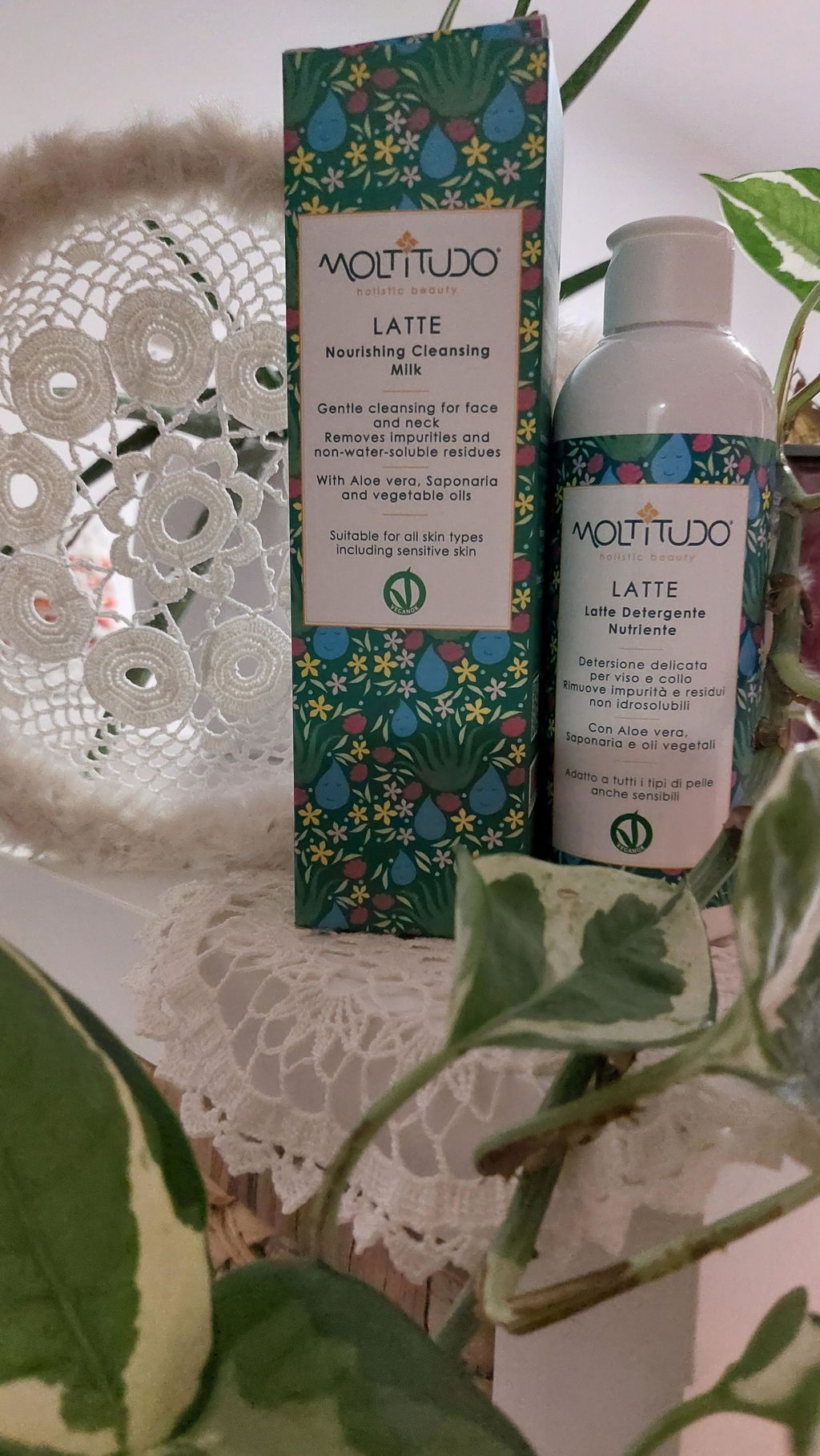
The formulation of the Moltitudo Nourishing and Gentle Cleansing Milk consists of selected plant-based ingredients designed to cleanse the skin while respecting its hydrolipidic film, promote skin hydration, and maintain softness, elasticity, and comfort. The evidence reported below relates exclusively to the documented properties of the individual ingredients used in cosmetic and dermatological applications.
Alkaline Water (Aqua)
Alkaline water is defined as water in which the treatment applied and the resulting functional characteristics have been the subject of scientific studies or reproducible experimental evaluations.
Alkaline waters are characterized by a pH between 8 and 10, the presence of dissolved molecular hydrogen, and a negative oxidation-reduction potential (ORP). According to scientific literature, these characteristics have been associated with the ability to modulate reactive oxygen species (ROS) through scavenger activity in the studied experimental systems (Shirahata et al., 2007).
In cosmetic formulations, water represents the main vehicle of the aqueous phase and contributes to the uniform dispersion of functional ingredients, the stability of the system, and the sensory characteristics of the product. The use of water with specific physicochemical characteristics can contribute to the overall quality of the formulation, promoting a pleasant texture and an even distribution of the ingredients on the skin surface.
In the Moltitudo Cleansing Milk, the alkaline aqueous phase is used as a formulation component to support the delivery of botanical ingredients and contribute to the cosmetic experience of gentle and comfortable cleansing.
Main scientific references
Bari ML, Sabina Y, Isobe S, Uemura T, Isshiki K. Effectiveness of electrolyzed water against foodborne pathogens under different conditions. Journal of Food Protection. 2003.
Shirahata S, Hamasaki T, Teruya K. Advanced research on the health benefit of reduced water. Trends in Food Science & Technology. 2012;23(2):124-131.
Shirahata S, Kabayama S, Nakano M, et al. Electrolyzed-reduced water scavenges active oxygen species and protects DNA from oxidative damage. Biochemical and Biophysical Research Communications. 1997;234(1):269-274.
Barel AO, Paye M, Maibach HI. Handbook of Cosmetic Science and Technology. CRC Press.
Draelos ZD. Cosmetic Dermatology: Products and Procedures. Wiley-Blackwell.
Aloe vera (Aloe barbadensis Leaf Juice)
Aloe vera gel represents one of the botanical ingredients most studied for topical use. It consists mainly of polysaccharides, including acemannan, amino acids, vitamins, minerals, and phenolic compounds that contribute to its moisturizing and soothing activity.
Several clinical studies have shown that the topical application of aloe promotes the maintenance of skin hydration, improves skin elasticity, and supports the natural repair processes of the epidermal barrier. Its film-forming properties also help reduce transepidermal water loss (TEWL), making the skin softer and more comfortable after cleansing.
Main scientific references
Surjushe A, Vasani R, Saple DG. Aloe vera: a short review. Indian Journal of Dermatology. 2008;53(4):163-166.
Hekmatpou D, Mehrabi F, Rahzani K, Aminiyan A. The effect of Aloe vera clinical trials on prevention and healing of skin wounds: a systematic review. Iranian Journal of Medical Sciences. 2019;44(1):1-9.
Fox LT, Mazumder A, Dwivedi A, Gerber M, Du Preez JL, Hamman JH. Advances in the controlled delivery of Aloe vera for skin applications. International Journal of Pharmaceutics. 2015;493:111-123.
Wheat Germ Oil (Triticum vulgare Germ Oil)
Wheat germ oil is one of the richest natural sources of vitamin E (tocopherols), phytosterols, and essential fatty acids. In cosmetology, it is used as an emollient and nutrient to support the barrier function of the stratum corneum.
Scientific evidence shows that essential fatty acids contribute to maintaining the integrity of the epidermal barrier, while tocopherols exert an important antioxidant activity against oxidative stress induced by UV rays and environmental pollutants.
Main scientific references
Lin TK, Zhong L, Santiago JL. Anti-inflammatory and skin barrier repair effects of topical application of some plant oils. International Journal of Molecular Sciences. 2018;19:70.
Thiele JJ, Ekanayake-Mudiyanselage S. Vitamin E in human skin: organ-specific physiology and considerations for its use in dermatology. Molecular Aspects of Medicine. 2007;28:646-667.
Evans WC. Trease and Evans Pharmacognosy. Elsevier.
Sweet Almond Oil (Prunus amygdalus dulcis Oil)
Sweet almond oil is traditionally used in the care of sensitive skin thanks to its high content of oleic acid, linoleic acid, phytosterols, and vitamin E.
Numerous dermatological studies show that topical application improves skin hydration, promotes the softness of the stratum corneum, and contributes to the protection of the barrier function. It is frequently used in cosmetics intended for dry, delicate, and easily irritated skin.
Main scientific references
Lin TK, Zhong L, Santiago JL. International Journal of Molecular Sciences. 2018;19:70.
Danby SG, Cork MJ. The skin barrier in atopic dermatitis. Current Opinion in Allergy and Clinical Immunology. 2010;10:382-389.
Draelos ZD. Cosmetic Dermatology: Products and Procedures. Wiley-Blackwell.
Cocamidopropyl Betaine
Cocamidopropyl Betaine is an amphoteric surfactant of plant origin obtained from the fatty acids of coconut oil. It is widely used in gentle dermatological cleansers thanks to its high skin compatibility.
Studies show that it reduces the aggressiveness of traditional cleansing systems, helping to preserve the hydrolipidic film and reducing the appearance of dryness and irritation after cleansing.
Main scientific references
Ananthapadmanabhan KP, Moore DJ, Subramanyan K, Misra M, Meyer F. Cleansing without compromise: the impact of cleansers on the skin barrier and the technology of mild cleansing. Dermatologic Therapy. 2004;17(Suppl.1):16-25.
Lodén M. The clinical benefit of moisturizers. Journal of the European Academy of Dermatology and Venereology. 2005;19:672-688.
Draelos ZD. Cosmetic Dermatology: Products and Procedures. Wiley-Blackwell.
Saponaria officinalis L. (Root Extract)
Saponaria root is naturally rich in triterpene saponins with natural surfactant activity. Historically, it has been used as a botanical cleanser for the gentle cleansing of the skin and fabrics.
Saponins promote the removal of dirt and sebum through a natural cleansing mechanism without significantly compromising the balance of the skin surface.
Main scientific references
Hostettmann K, Marston A. Saponins. Cambridge University Press. 1995.
Sparg SG, Light ME, Van Staden J. Biological activities and distribution of plant saponins. Journal of Ethnopharmacology. 2004;94(2-3):219-243.
Wina E, Muetzel S, Becker K. The impact of saponins on biological systems. British Journal of Nutrition. 2005;88:587-605.
Vegetable Glycerol (Glycerin)
Glycerin represents one of the most studied humectants in dermatology. Thanks to its ability to draw water into the stratum corneum, it improves skin hydration and contributes to maintaining the barrier function.
Numerous clinical studies show that glycerin increases skin elasticity, reduces dryness, and promotes the physiological epidermal turnover.
Main scientific references
Fluhr JW, Darlenski R, Surber C. Glycerol and the skin: holistic approach to its origin and functions. British Journal of Dermatology. 2008;159:23-34.
Lodén M. Role of topical emollients and moisturizers in the treatment of dry skin barrier disorders. American Journal of Clinical Dermatology. 2003;4:771-788.
Rawlings AV, Harding CR. Moisturization and skin barrier function. Dermatologic Therapy. 2004;17(Suppl.1):43-48.
Magnesium Chloride
Magnesium salts have been studied for their ability to support the maintenance of the barrier function and epidermal hydration.
Topical applications of magnesium-rich solutions have shown an improvement in barrier function and skin softness, especially in dry and sensitive skin.
Main scientific references
Proksch E, Nissen HP, Bremgartner M, Urquhart C. Bathing in a magnesium-rich Dead Sea salt solution improves skin barrier function and enhances skin hydration in atopic dry skin. International Journal of Dermatology. 2005;44(2):151-157.
Denda M, Katagiri C, Hirao T, Maruyama N, Takahashi M. Some magnesium salts and their effects on epidermal barrier homeostasis. Journal of Investigative Dermatology. 1999;113:680-683.
Xanthan Gum (Xanthan Gum)
Xanthan gum is a natural polysaccharide used as a thickening and stabilizing agent in cosmetic formulations. In addition to improving the consistency of the product, it contributes to the formation of a moisturizing surface film that increases the pleasantness of application and reduces water loss from the skin surface.
Main scientific references
Rowe RC, Sheskey PJ, Quinn ME. Handbook of Pharmaceutical Excipients. Pharmaceutical Press.
Barel AO, Paye M, Maibach HI. Handbook of Cosmetic Science and Technology. CRC Press.
Sodium Chloride (Sodium Chloride)
Sodium chloride is used in cosmetic cleansers as a viscosity regulator and surfactant system stabilizer, contributing to the correct consistency of the cleansing milk and the quality of the texture during application.
Main scientific references
Harry's Cosmeticology. 9th Edition.
Barel AO, Paye M, Maibach HI. Handbook of Cosmetic Science and Technology. CRC Press.
General bibliography
Ananthapadmanabhan KP, Moore DJ, Subramanyan K, Misra M, Meyer F. Cleansing without compromise: the impact of cleansers on the skin barrier and the technology of mild cleansing. Dermatologic Therapy. 2004;17(Suppl.1):16-25.
Fluhr JW, Darlenski R, Surber C. Glycerol and the skin: holistic approach to its origin and functions. British Journal of Dermatology. 2008;159:23-34.
Lin TK, Zhong L, Santiago JL. Anti-inflammatory and skin barrier repair effects of topical application of some plant oils. International Journal of Molecular Sciences. 2018;19:70.
Proksch E, Nissen HP, Bremgartner M, Urquhart C. Bathing in a magnesium-rich Dead Sea salt solution improves skin barrier function and enhances skin hydration in atopic dry skin. International Journal of Dermatology. 2005;44(2):151-157.
Rawlings AV, Harding CR. Moisturization and skin barrier function. Dermatologic Therapy. 2004;17(Suppl.1):43-48.
Surjushe A, Vasani R, Saple DG. Aloe vera: a short review. Indian Journal of Dermatology. 2008;53(4):163-166.
Draelos ZD. Cosmetic Dermatology: Products and Procedures. Wiley-Blackwell.
Barel AO, Paye M, Maibach HI. Handbook of Cosmetic Science and Technology. CRC Press.
Hostettmann K, Marston A. Saponins. Cambridge University Press.